

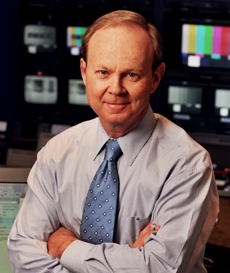
By MIKE MAGEE
As we entered the 2026 Mid-terms, twenty physicians held seats in Congress, 4 within the Senate and 16 within the Home, a document for physicians within the highest workplaces of the land. (I present an inventory beneath.)
Within the wake of Tuesday’s exceptional show of democracy, many have shined a light-weight on a number of new elected physicians, together with Sen. Abdul El-Sayed (D-Mich.), Sen. Annie Andrews (D-S.C.), and notably the election of a girl doctor as governor of Ohio, Gov. Amy Acton (D-Ohio).
They’ll be part of, come January, two standing doctor senators – John Barrasso (R-WY) and Rand Paul (R-KY), and go away behind two different Republican Senators, Invoice Cassidy (R-LA) and Roger Marshall (R-KS), each mired in controversy.
Doctor leaders. Is that this a superb factor for our nation, fighting an inequitable and prohibitively costly well being care system, a frayed and collapsing public well being infrastructure, and a reckless vaccine coverage launched by a public official whose circle of relatives members describe him as, nicely, “loopy.”
My quick reply is “On the entire with notable exceptions, sure.” In quest of a solution why, I’m going again to a speech I gave, now twenty years in the past, on March 12, 2006 on the AMA President’s Discussion board in Washington, D.C.
In that speech to the nationwide management of the AMA’s “Home of Medication,” I supplied three causes for my religion in entrusting doctor leaders with the heavy mantle of management:
“The world is a greater place at the moment for having developed and supported sturdy, enduring patient-physician relationships. This isn’t merely a operate of the nuts and bolts well being care that this relationship supplies, in full imaginative and prescient day in and time out. But in addition for these issues it has reliably delivered over many many years all over the world, quietly beneath the radar display screen.
1. The primary of those, as a collective, is the administration and processing of a inhabitants’s concern and fear, which, absent our efforts, would accumulate to destabilizing impact.
2. The second is a refined and rational reinforcement of necessary societal bonds as an outflow of personalization of care. The significance of this second contribution was finest highlighted by the nice Cardinal Bernardin, who shortly earlier than he died mentioned to a number of thousand AMA physicians, ‘There are 4 phrases within the English language which have widespread English roots. They’re Heal, Well being, Entire and Holy. I let you know this at the moment to remind every of you that to heal in a contemporary world you will need to present well being; and to offer well being you will need to preserve the person, the household, the group, and society complete. And if you are able to do all that, why that may be a holy factor.’
3. The third largely invisible contribution that the patient-physician relationship makes to society is hopefulness; a quiet confidence that the majority issues could be managed, most mysteries solved, and that, absent a remedy at the moment, there stays hope for a discovery tomorrow. That deep seated optimism, embodied in a person whom you belief, have faith in, and consider in, is transferable.
As a collective every day, and daily, we assist create a reservoir of excellent will, a perception that life is price residing, that dangers are price taking, that loving and being cherished is feasible, that dreaming, imagining, buying a house, getting married, having kids are all definitely worth the effort.
So it’s my agency perception that if tomorrow all patient-physician relationships had been to vanish, secure civil societies would instantly discover the distinction. Our populations could be extra fearful, much less trusting, much less tolerant, much less related, much less compassionate, much less productive, and fewer dedicated to the longer term.”
20 years later, as I method 80, do I nonetheless consider these phrases? On the entire, the reply is “Sure.” However excessive expectations go away a steep decline emotionally when our fellow human physicians disappoint.
Again then, I labelled this minority of physicians as “unfavourable leaders”:
“Unfavorable leaders view change with concern and leverage that concern as a foreign money to regulate a inhabitants to be able to reinforce current and previous energy silos. They try and segregate us one from one other to take care of the established order, they usually deserve our contempt. They not solely draw down the reservoir of excellent will regionally and globally, however guarantee our medium and long run failure. Whereas their extremely efficient techniques can lock a quivering public in test, they can not cease the world from altering round them. And so for unfavourable leaders, success is brief time period, for they’re quickly overtaken by one another, and by environmental occasions.”
With youthful optimism again then, I provided this various. Select “optimistic leaders” to steer. I mentioned that day:
“Distinction these with optimistic leaders for whom visioning, reasonably than concern, is the foreign money. The place one excludes, the opposite consists of. The place one reinforces the established order, the opposite makes fixed incremental changes. The place one performs by the previous guidelines, the opposite makes the brand new guidelines. The place one segregates, the opposite congregates. The place one reinforces silos, the opposite builds islands of widespread stewardship.”
I’m inspired at the moment, now 20 years later, together with your newly elected doctor leaders – Abdul El-Sayed, Annie Andrews (D-S.C.), and Amy Acton (D-Ohio).
Right here is a current list of physicians serving within the U.S. Senate and Home of Representatives:
Senate:
John Barrasso (R) WY Orthopedic surgical procedure
Invoice Cassidy (R) LA Gastroenterology/hepatology
Roger Marshall (R) KS Obstetrics/gynecology
Rand Paul (R) KY Ophthalmology
Home of Representatives:
Ami Bera (D) CA Inside medication
Herb Conaway (D) NJ Inside Medication
Scott DesJarlais (R) TN Basic/household medication
Maxine Dexter (D) OR Pulmonary/essential care
Neal Dunn (R) FL Urology
Andy Harris (R) MD Anesthesiology
Ronny Jackson (R) TX Emergency medication
John Joyce (R) PA Dermatology
Mike Kennedy (R) UT Household medication
Wealthy McCormick (R) GA Emergency medication
Mariannette Miller-Meeks (R) IA Ophthalmology
Kelly Morrison (D) MN Obstetrics/gynecology
Greg Murphy (R) NC Urology
Bob Onder (R) MO Allergy/immunology
Raul Ruiz (D) CA Emergency Medication
Kim Schrier (D) WA Pediatrics
Right here is the list of physicians who ran for workplace and the outcomes:
Wealthy McCormick (R-GA) (+)
Mariannette Miller-Meeks (R-IA) (-)
Roger Marshall (R-KS) (-)
Andy Harris (R-MD) (+)
Bob Onder (R-MO) (+)
Greg Murphy (R-NC) (?)
John Joyce (R-PA) (+)
Scott DesJarlais (R-TN) (?)
Ronny Jackson (R-TX) (+)
Mike Kennedy (R-UT) (+)
Ami Bera (D-CA) (+)
Raul Ruiz (D-CA) (+)
Kelly Morrison (D-MN) (+)
Herb Conaway (D-NJ) (+)
Maxine Dexter (D-OR) (+)
Kim Schrier (D-WA) (+)
Amish Shah (D-AZ) (+)
Richard Pan (D-CA) (+)
Abdul El-Sayed (D-MI) (+)
Adam Hamawy (D-NJ) (+)
Annie Andrews (D-SC) (+)
John Cowan (R-GA) (+)
Ralph Alvarado (R-KY) (-)
Mike Magee MD is a Medical Historian and common contributor to THCB. He’s the creator of CODE BLUE: Inside America’s Medical Industrial Complex. Grove/2020
