

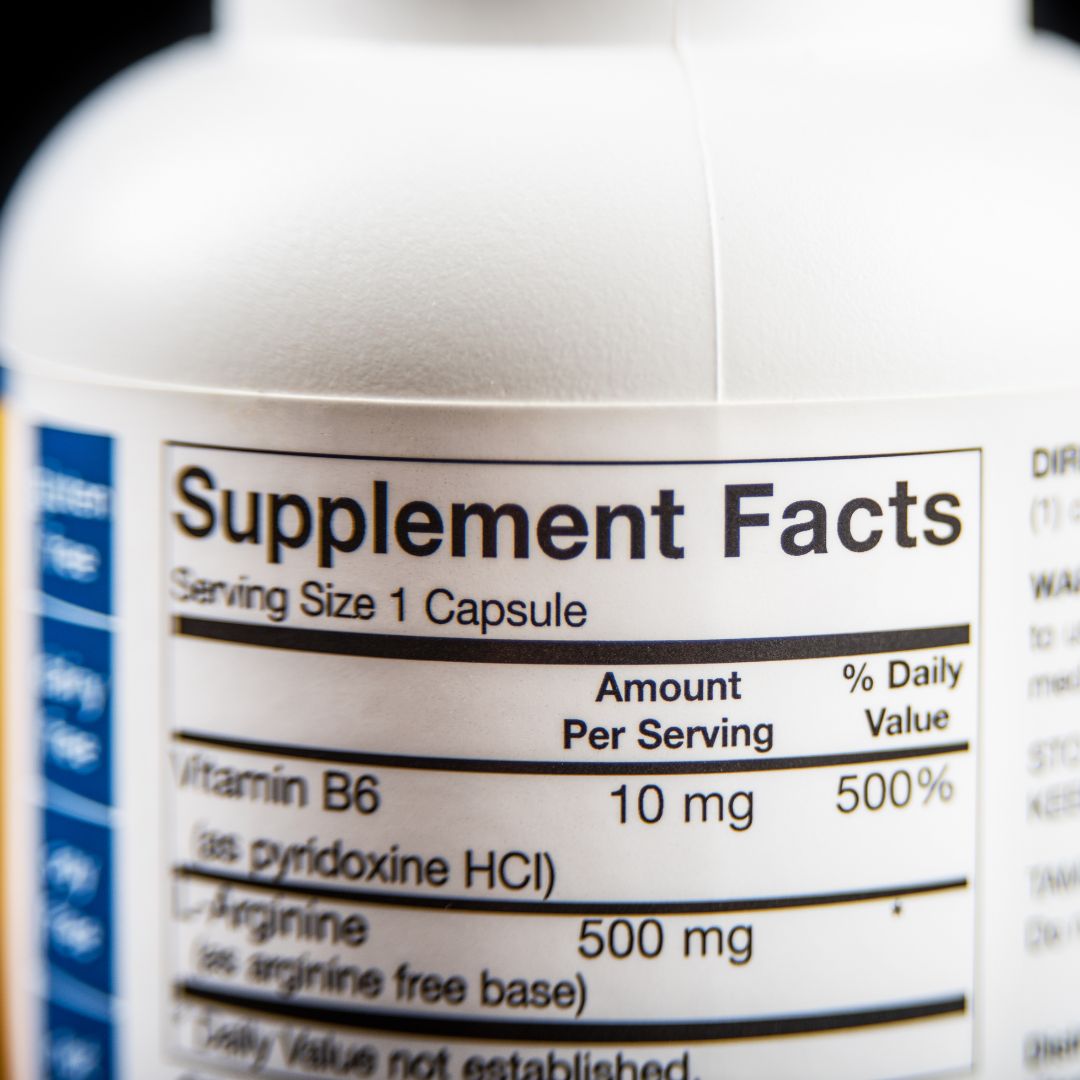
Wellness manufacturers typically make scientific-sounding claims, however understanding the proof behind them is not at all times easy. Ingredient lists and testing statements can present helpful data with out explaining what has truly been established.
For research-led companies reminiscent of Morpho Peptides, a provider of research-use-only laboratory supplies, compound documentation and analytical testing are a part of this wider dialog about scientific transparency. Understanding what these strategies can show, in addition to what they can not, is crucial to evaluating scientific claims.

Why Customers Need Extra Transparency
UK analysis factors to a spot between wellness advertising and marketing and shopper confidence. A Which? survey discovered that 52% of respondents discovered complement data complicated, whereas solely 35% of complement customers at all times learn label data.
Individually, YouGov research published in July 2025 discovered that 70% of UK adults believed most wellness dietary supplements have been overhyped, whereas three-quarters have been skeptical of wellness traits encountered on-line.
These findings recommend that offering extra data is not sufficient if shoppers can’t simply interpret it. Clear disclosures and appropriately certified claims assist individuals perceive what is understood, what has been examined, and what stays unsure.
Begin With the Components, Not the Advertising Claims
As a substitute of taking the guarantees on a complement’s packaging at face worth, begin by checking what’s inside. Claims about enhanced efficiency, sooner restoration, or extra power would possibly catch your consideration, however the Complement Details panel and ingredient record offer you one thing extra concrete to work with: the declared substances and their quantities per serving.
Proprietary blends make issues trickier. A label could record a number of substances whereas disclosing solely their mixed weight. That leaves you with out a clear image of how a lot of every ingredient the formulation incorporates, making comparisons with quantities utilized in scientific research tough.
However understanding the substances and their portions is simply a part of the image. What proof helps their use? Have human research examined the precise ingredient, and did they discover the profit marketed? Even a promising ingredient record does not let you know whether or not the completed product lives as much as its claims.
What Third-Occasion Testing Can Inform You About Complement High quality
An ingredient record tells you what a model claims to have in its product. However how are you going to verify whether or not these claims are supported by testing? Unbiased laboratory evaluation might help reply that query. Relying on the strategies concerned, analysts can study a fabric’s identification, composition, and purity, in addition to display for sure contaminants. Nonetheless, the phrase “third-party examined” leaves necessary questions unanswered if the scope of the testing is not clear.
A certificates of research (CoA) offers a extra detailed account of the outcomes for a selected pattern. What was examined, which strategies have been used, and might the laboratory’s credentials be verified? All of this issues. So does the pattern itself: findings from one batch should not routinely be taken as consultant of each different batch.
Analysis suppliers such because the above-mentioned MorphoPeptides illustrate how analytical testing can convey higher transparency to analysis supplies. The corporate describes utilizing mass spectrometry to substantiate compound identification and high-performance liquid chromatography (HPLC) to evaluate purity. These strategies give researchers measurable details about a pattern’s chemical traits, serving to them set up what they’re working with.
Making these findings accessible in clear documentation permits the outcomes to be examined in context. There may be, nonetheless, a distinction between establishing a fabric’s identification and purity and understanding its organic results. The previous will be investigated by means of analytical testing; the latter requires extra proof from appropriately designed analysis.
Proof or documentation | What it may well set up | What it can’t set up alone |
Ingredient record | Which substances are declared | Whether or not a product delivers its claimed advantages |
Certificates of research | Reported analytical outcomes for a specified pattern | Scientific effectiveness or consistency throughout each batch |
Third-party certification | Whether or not a product meets a selected program’s standards | Common security or effectiveness |
Human scientific research | Proof for particular outcomes beneath studied situations | That each formulation produces the identical outcomes |
The NIH Office of Dietary Supplements offers additional data about complement high quality and evaluating proof behind well being claims.
Find out how to Acknowledge Proof-Primarily based Claims
Phrases like “clinically confirmed” can sound reassuring, however what do they really let you know? SET FOR SET’s information to fat burner ingredients backed by science and those you should skip exhibits why an ingredient’s reputation does not essentially match the power of the proof behind it.
The subsequent step is to look at what the analysis truly coated. Did the research contain human individuals? Had been researchers testing the ingredient itself or the completed product? And was the marketed profit among the many outcomes they measured? Fascinating early findings or outcomes obtained beneath particular situations do not essentially justify broader claims, so these distinctions are price protecting in thoughts.
However scientific reporting entails greater than presenting promising outcomes. It additionally means being open about limitations, gaps within the proof, and questions that stay unanswered. When a model’s claims stretch past what the analysis has established, that distinction should not be ignored.
Why Analysis Documentation Issues
Scientific claims are simpler to evaluate when the supporting proof is out there for scrutiny. Clear information present how outcomes have been obtained, which strategies have been used, and whether or not the conclusions match the findings. With out that context, even a technical report will be tough to interpret.
Documentation additionally helps separate what has been measured from what’s merely assumed. A laboratory outcome could set up a fabric’s identification or purity, for instance, nevertheless it can’t reply each query about its results. The worth lies in understanding exactly what the proof helps and the place additional analysis is required.
A Fast Guidelines Earlier than Trusting a Complement Label
- Test whether or not serving sizes and particular person ingredient portions are clearly disclosed.
- Confirm testing claims with the related laboratory or certification group.
- Search for documentation figuring out the pattern, strategies, and reported outcomes.
- Test whether or not well being claims are supported by related scientific proof.
- Distinguish established findings from preliminary analysis and unresolved questions.
Conclusion
Credibility in an trade flooded with claims made by so-called specialists goes past simply the data discovered on the label. The actual query is whether or not the proof behind the claims will be analyzed, interpreted, and verified independently. Manufacturers might help readers differentiate between true transparency and scientific-sounding language by explaining what their analysis truly exhibits and what its limitations are.
